
 Industrial Dust Removal Equipment-Recycling Product-Jiangxi Mingxin Metallurgy Equipment Co., Ltd.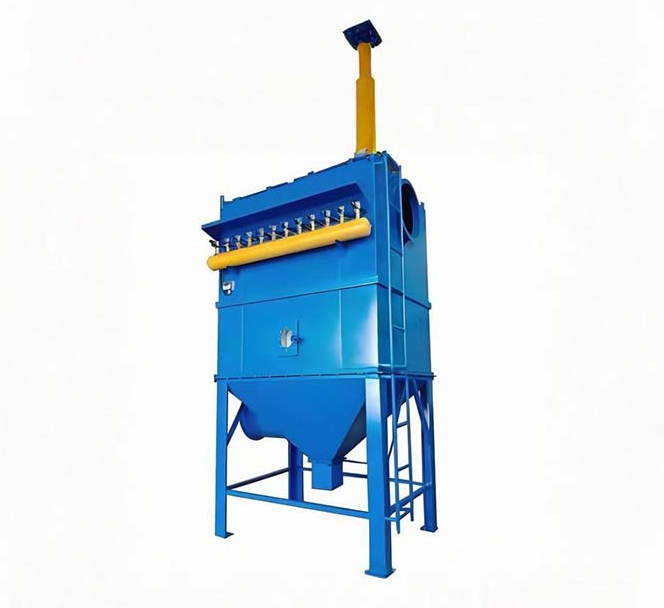
I. Definition of Industrial Dust Removal Equipment
Industrial dust removal equipment, also known as industrial dust collectors, is a type of environmental protection device specifically designed for industrial production scenarios. It is used to capture, filter, and remove dust, fumes, and particulate pollutants generated during production processes. It can effectively control dust emissions, improve the working environment in workshops, protect the health of operators, comply with national environmental emission standards, and assist enterprises in achieving green production.
II. Classification of Industrial Dust Removal Equipment
(I) Mechanical Dust Removal Equipment
Mechanical dust removal equipment separates dust from the gas stream using mechanical forces (such as gravity, inertia, centrifugal force, etc.). It features a relatively simple structure, low cost, and convenient maintenance. However, its dust removal efficiency is relatively low, making it suitable for handling dust with larger particle sizes and higher concentrations. Common types include:
• Gravity Settlers: Utilize the dust's own weight, allowing dust in the dusty gas stream to settle naturally under gravity, thereby achieving gas-dust separation. Often used for pre-treatment in dust removal systems to remove larger dust particles.
• Inertial Dust Collectors: Use the inertia of dust particles to separate them from the gas stream by impacting baffles or changing the gas flow direction. Suitable for capturing dust particles larger than 10μm, often used in conjunction with other dust removal equipment.
• Cyclone Dust Collectors: Force the dusty gas stream into high-speed rotational motion within the cylinder. Dust particles are thrown towards the cylinder wall by centrifugal force, slide down the wall, and are discharged from the hopper. Purified gas exits through the central pipe. Its dust removal efficiency is higher than that of gravity and inertial dust collectors. It can handle dust particles above 5-10μm and is widely used in industries like building materials, chemicals, and metallurgy.
(II) Electrostatic Precipitators (ESP)
Electrostatic Precipitators use a high-voltage electric field to charge dust particles. Charged dust particles are then adsorbed onto the collection electrodes by the electric field force, achieving gas-dust separation. Advantages include high dust removal efficiency (can exceed 99%), wide processing air volume range, low resistance, and low energy consumption. However, the equipment requires high investment, occupies a large area, and is sensitive to dust characteristics. It is suitable for handling dust with small particle sizes and low concentrations, commonly used for flue gas purification in large-scale industrial enterprises like power generation, metallurgy, and chemicals.
(III) Filtration Dust Removal Equipment
Filtration dust removal equipment filters the dusty gas stream through filter media (such as filter fabric, filter cartridges, filter paper, etc.), trapping dust particles on the surface or within the medium, thereby purifying the gas. It offers high dust removal efficiency, effectively removes fine dust particles, and has a wide range of applications. Common types include:
• Baghouse Dust Collectors: Use filter bags as the filter media. As dusty gas passes through the filter bags, dust is trapped on the outer surface. Dust on the bags is periodically removed by a cleaning device. They feature high dust removal efficiency, strong adaptability, stable operation, and can handle various types of dust. Widely used in machinery, chemical, building materials, power, and other industries.
• Cartridge Dust Collectors: Use filter cartridges as the filtering element. They offer a large filtration area, high filtration efficiency, small size, light weight, and are easy to install and maintain. Suitable for applications with low dust concentration and small particle sizes, such as electronics, machining, and grain processing.
(IV) Wet Dust Removal Equipment
Wet dust removal equipment uses water or other liquids as the collecting agent. The dusty gas stream contacts the liquid through methods like spraying, washing, or foaming, causing dust particles to be captured. This forms dust-laden wastewater or slurry, which is then treated further. Advantages include simple structure, low cost, and the ability to simultaneously remove dust and harmful gases. However, it produces wastewater requiring treatment and is not suitable for hydrophobic dust or deliquescent dust. Common types include:
• Spray Tower Scrubbers: Dusty gas enters from the bottom and flows upward, fully contacting liquid (usually water) sprayed from the top. Dust particles are captured by the liquid and discharged together from the bottom.
• Water-film Scrubbers: Create a water film on the inner wall of the cylinder as the dusty gas rotates inside. Dust particles thrown towards the wall are adhered to and carried away by the water film, achieving separation.
• Foam Scrubbers: Inject foam into the dusty gas stream, utilizing the foam's large surface area and adsorption capacity to capture dust particles. Offers high dust removal efficiency and can also remove some harmful gases.
III. Working Principles of Industrial Dust Removal Equipment
Working principles vary for different types:
• Mechanical (e.g., Cyclone): Dusty gas enters tangentially, creating a vortex. Centrifugal force throws heavier dust particles to the wall. They lose kinetic energy upon collision, slide down, and collect in the hopper. Cleaned gas forms an inner vortex and exits from the top.
• Electrostatic Precipitators: A high-voltage DC system creates a corona discharge at discharge electrodes, ionizing gas. Dust particles passing through the electric field become charged. They migrate to and are collected on oppositely charged plates. Collected dust is periodically removed by rapping or washing into a hopper.
• Filtration (e.g., Baghouse): Dusty gas enters and is distributed to filter bags. Dust is trapped on the bag surfaces via mechanisms like interception, inertial impaction, diffusion, and electrostatic attraction. Clean gas passes through. As the dust cake builds, resistance increases. A cleaning cycle (e.g., pulse-jet) removes the cake into the hopper, restoring filtration.
• Wet (e.g., Spray Tower): Dusty gas enters from the bottom and flows upward. Liquid is sprayed from the top, forming droplets. Dust particles collide with and are captured by droplets, forming larger agglomerates that fall by gravity. Cleaned gas exits from the top, often passing through a mist eliminator.
IV. Key Points for Selecting Industrial Dust Removal Equipment
• Dust Characteristics: Understanding properties like particle size distribution, density, moisture, stickiness, and corrosiveness is crucial. For example, sticky dust is unsuitable for baghouses, and corrosive dust requires corrosion-resistant materials.
• Processing Air Volume: The volume of dusty gas the unit can handle per unit time. Must match the generated gas volume to ensure effective treatment and prevent超标排放 (exceeding emission standards).
• Required Dust Removal Efficiency: Determine based on national standards and internal requirements. Different types offer different efficiencies (e.g., ESP and baghouses are high; mechanical collectors are lower).
• Equipment Operating Resistance (Pressure Drop): The resistance encountered by the gas stream. Affects fan energy consumption and operating costs. Lower resistance equipment is preferred to reduce energy use.
• Footprint and Installation Conditions: Consider available plant space, height, and location. Choose compact, easily installed equipment (e.g., cartridge collectors for limited space). ESPs typically require more space.
• Investment and Operating Costs: Consider the total cost of ownership: initial investment, operating costs (energy, consumables like bags, maintenance), and lifespan. For instance, ESPs have high initial cost but lower operating costs and long life; baghouses have lower initial cost but higher operating costs due to periodic bag replacement.
V. Maintenance of Industrial Dust Removal Equipment
• Regular Inspection: Periodically check all components (filters, electrodes, sprayers, cleaning mechanisms, fans, motors, valves) for damage, aging, clogging, or leaks. Identify and address potential faults promptly.
• Cleaning Maintenance: Perform regular cleaning per equipment type and operation. Clean filter bags/cartridges to prevent excessive pressure drop; clean electrodes in ESPs; remove accumulated dust/sludge in wet scrubbers to prevent blockages.
• Component Replacement: Timely replace worn parts (filters, seals, bearings) based on service life and condition. Use compatible parts to ensure performance.
• Lubrication: Regularly lubricate rotating parts (fans, motors, reducers) to reduce friction, extend life, and ensure stable operation.
• Electrical System Maintenance: Regularly check the electrical system (high-voltage power supply, control cabinet, wiring). Ensure secure connections, good insulation, and proper component function. Repair electrical faults with power off; never work on live circuits.
• Record Keeping and Analysis: Maintain detailed logs of operating parameters, maintenance activities, faults, and resolutions. Analyze records to understand operational patterns and failure modes, guiding optimized operation and maintenance.
VI. Development Trends for Industrial Dust Removal Equipment
• Higher Efficiency: Driven by stricter standards, equipment will evolve for higher efficiency. This involves optimizing structure, improving filter media, increasing electric field strength, etc., to better capture fine particles and meet stringent limits.
• Energy Saving: A key trend amidst energy constraints. Efforts include adopting low-resistance designs, high-efficiency fans/motors, and optimized cleaning methods to reduce energy consumption and operating costs.
• Intelligence: Leveraging IoT, big data, and AI. Sensors monitor real-time parameters (air volume, efficiency, pressure drop, temperature, humidity, faults). Data is sent to a central control system for analysis, enabling automatic adjustment, optimized operation, predictive maintenance, and improved reliability.
• Multi-functionality: To address co-treatment needs, equipment will integrate additional functions like desulfurization, denitrification, and heavy metal removal alongside dust collection. This allows simultaneous removal of multiple pollutants, reducing footprint, investment, and improving overall environmental management.
• Compactness and Integration: For SMEs or space-limited sites, compact, integrated, modular designs forming complete systems are favored. This reduces footprint and eases installation, commissioning, and maintenance.
• Greener Design: Beyond performance, focus on environmental friendliness. Using eco-friendly materials/processes in manufacturing and operation. Effectively treating and recycling secondary pollutants (e.g., dust-laden water, dust residue) generated during the process for greener operation.